
Dive Sites
Puerto Galera Dive Sites
Canyons
(24m/79ft to 30m/99ft but for advanced divers only due to fierce current at this site. A very healthy large reef area slit by large fissures (crack) has resulted in three spectacular canyons. Soft tree corals and excellent diversity of hard corals add many beautiful colors to the reef. There is usually a current at this site, making it a world-class exhilarating drift dive.
Dungon Wall
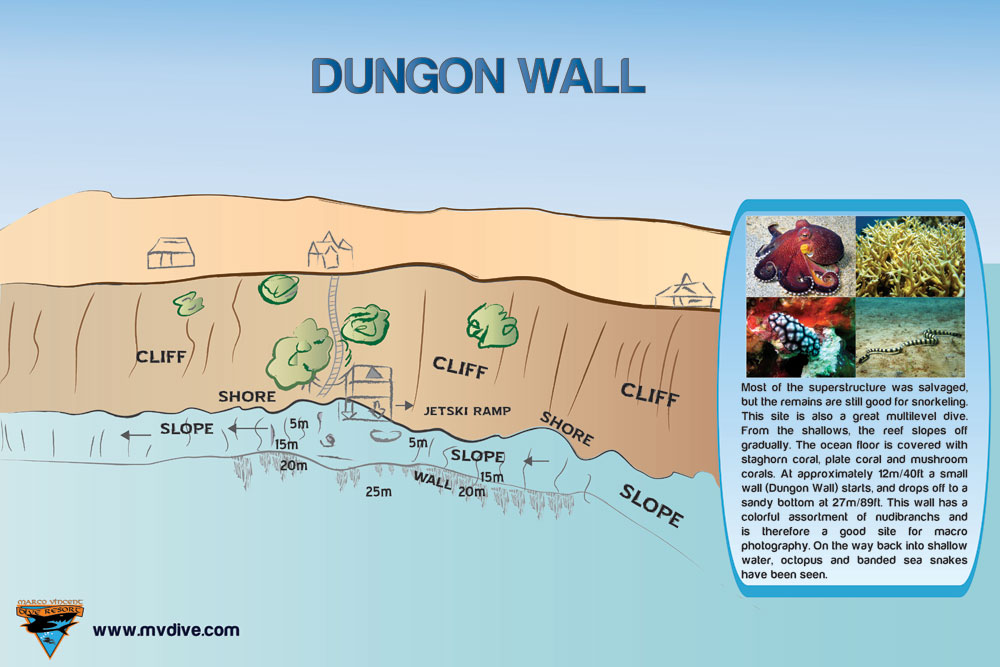
Dungon Wall is another breathtaking drift dive site in Puerto Galera.
Most of the superstructure was salvaged, but the remains are still good for snorkeling. This site is also a great multilevel dive. From the shallows, the reef slopes off gradually. The ocean floor is covered with staghorn coral, plate coral and mushroom corals, At approximately 12m/40ft a small wall (Dungon Wall) starts, and drops off to a sandy bottom at 27m/89ft. This wall has a colorful assortment of nudibranchs and is therefore a good site for macro photography. On the way back into shallow water, octopus and banded sea snakes have been seen.
Kilima Steps
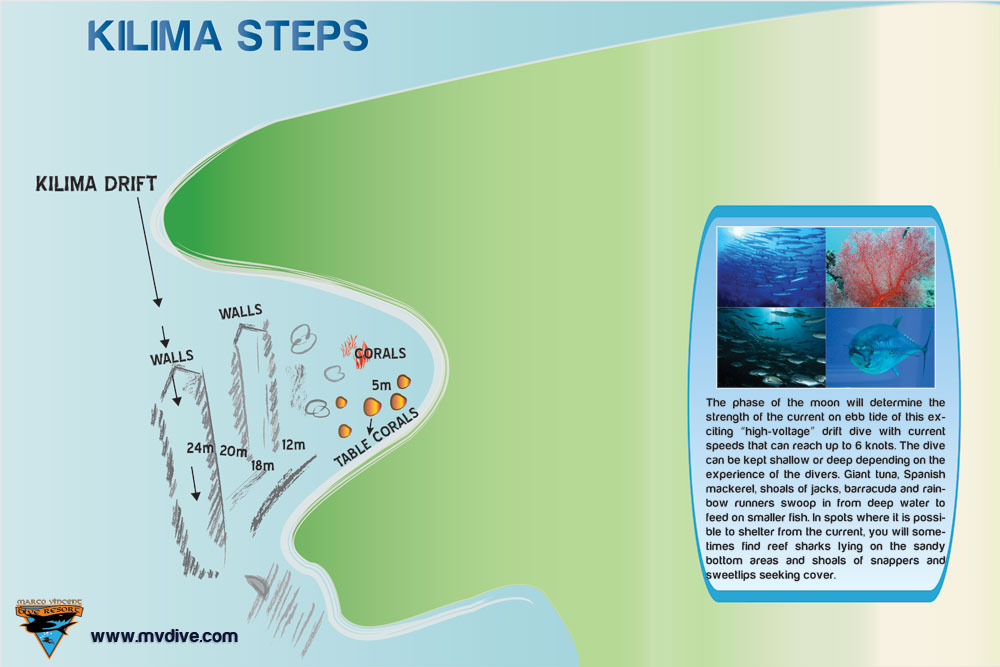
Kilima Steps provides amazing underwater scenery with ledges and rock formations ranging from 8 to 25 meters, creating steps-like topography.
Various hard coral species, including green tree corals and big barrel sponges, can be found here. The diversity of marine life here is astounding; divers will discover that leisurely diving reveals amazing creatures like Octopi, Cuttlefish, Moray Eels, and the amazing Pygmy Seahorses that lurk among the massive fan corals.
The phase of the moon will determine the strength of the current on ebb tide of this exciting “high-voltage” drift dive with current speeds that can reach up to 6 knots. The dive can be kept shallow or deep depending on the experience of the dives. Giant tuna, Spanish mackerel, shoals of jacks, barracuda and rainbow runners swoop in from deep water to feed on smaller fish. In spots where it is possible to shelter from the current, you will sometimes find reef sharks lying on the sandy bottom areas and shoals of snappers and sweetlips seeking cover.
LA Laguna Point
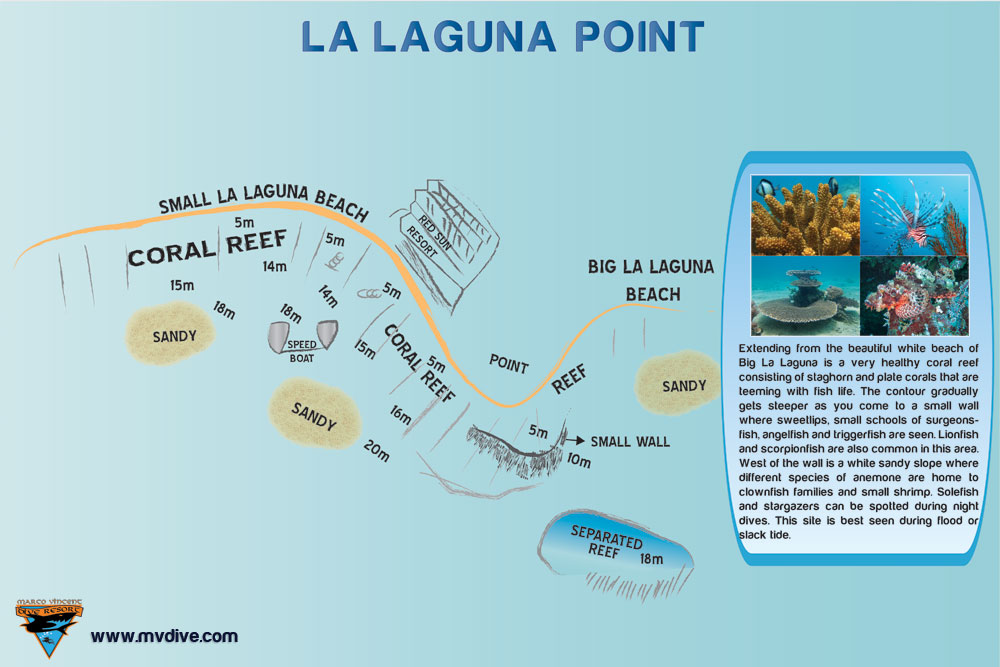
Extending from the beautiful white beach of Big La Laguna is a very healthy coral reef consisting of staghorn and plate corals that are teeming with fish life. The condor gradually gets sleeper as you come to small wall where sweetlips, small schools of surgeons-fish, angelfish and triggerfish are seen. Lionfish and scorpionfish are also common in this area. West of the wall is a white sandy slope where different species of anemone are home to clownfish families and small shrimp. Solefish and stargazers can be spotted during night dives. This site is best seen during flood or slack tide.
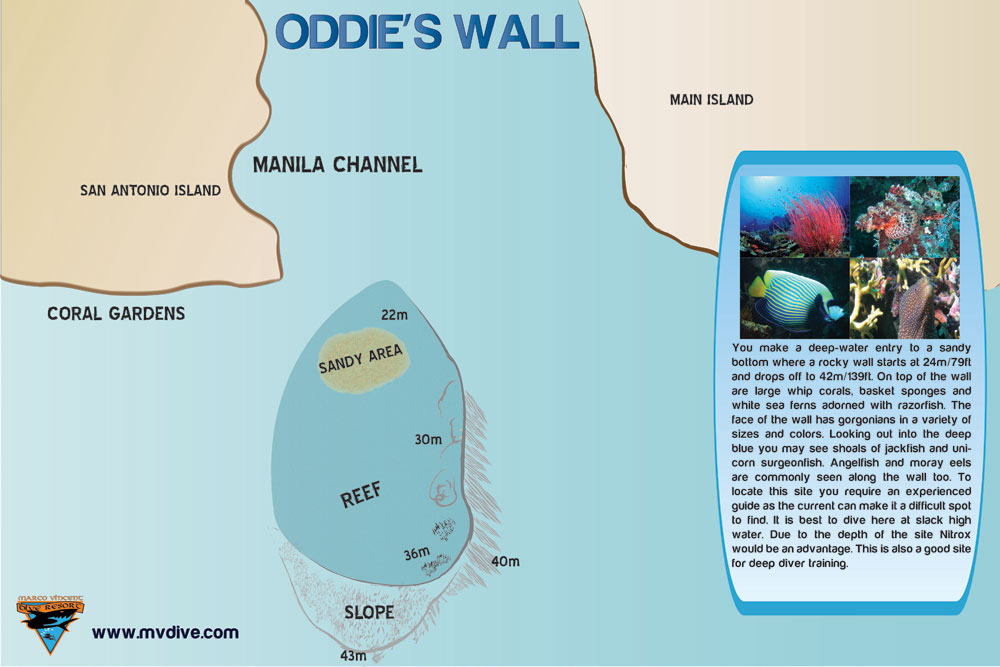
Oddie’s Wall
You make a deep-water entry to a sandy bottom where a rocky wall starts at 24m/79ft and drops off to 42m/139ft. On top of the wall are large whip corals, basket sponges and white sea ferns adorned with razorfish. The face of the wall has gorgonians in a variety of sizes and colors. Looking out into the deep blue you may see shoals at jackfish and unicorn surgeonfish. Angelfish and moray eels are commonly seen along the wall too. To locate this site you require an experienced guide as the current can make it a difficult spot to find. It is best to dive here at slack high water. Due to the depth of the site Nitrox would be an advantage. This is also a good site for deep diver training.
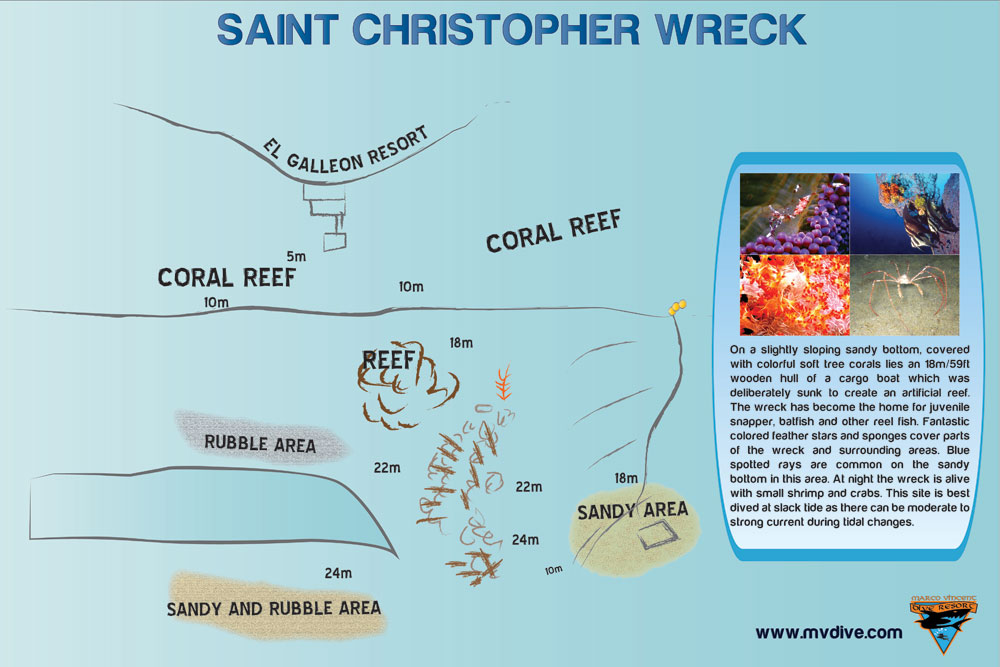
Saint Christopher Wreck
On a slightly sloping sandy bottom, covered with colorful soft tree corals lies an 18m/59ft wooden hull of a cargo boat which was deliberately sunk to create an artificial reef. The wreck has become the home for juvenile snapper, batfish and other reef fish, Fantastic colored feather stars and sponges cover parts of the wreck and surrounding areas. Blue spotted rays are common on the sandy bottom in this area. At night the wreck is alive with small shrimp and crabs. This site is best dived at slack tide as there can be moderate to strong current during tidal changes.
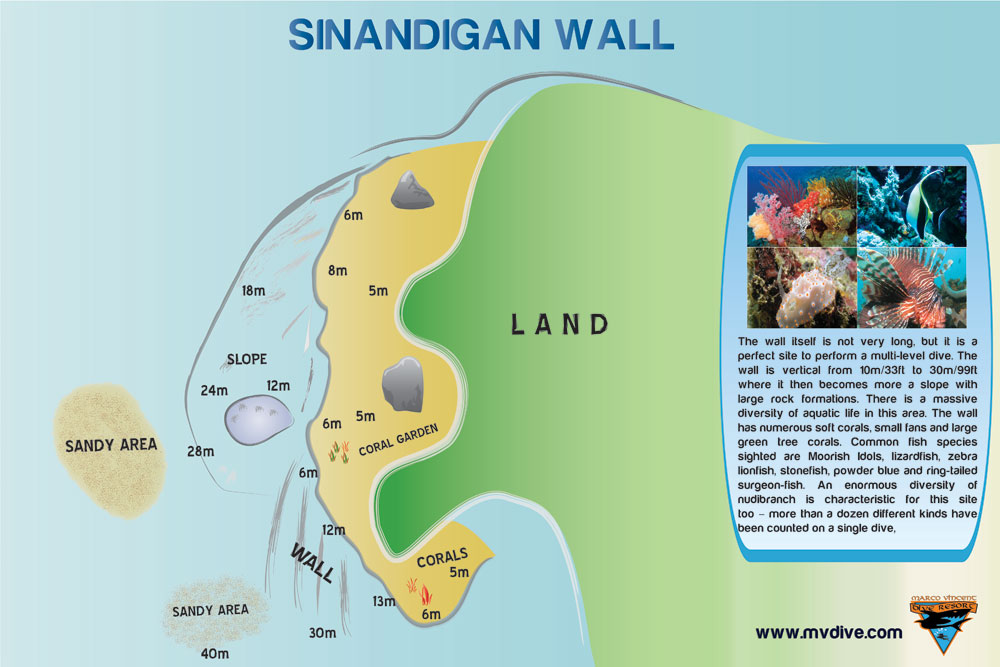
Sinandigan Wall
The wall itself is not very long, but is a perfect site to perform a multi-level dive. The all is the vertical from 10m/33ft to 30m/99ft where it becomes more a slope with large rock formations. There is a massive diversity of aquatic life in this area. The wall has numerous soft corals, small fans and large green tree corals. Common fish species sighted are Moorish Idols, lizard fish, zebra, lionfish, stonefish, powder blue and ring-tailed surgeon-fish. An enormous diversity of nudibranch is characteristics for this site too – more than dozen different kinds have been counted on a single dive.
The DESERT
The sandy area just out from White Beach is abundant with small octopus and other small creatures. Nudibranch can be found as well as Flamboyant Cuttlefish. This dive site is best for night diving. This
is also the best time to see crabs,lobsters and shrimp and of course the amazing organism that can only be seen at night with all lights turned off is “bio-luminescence.
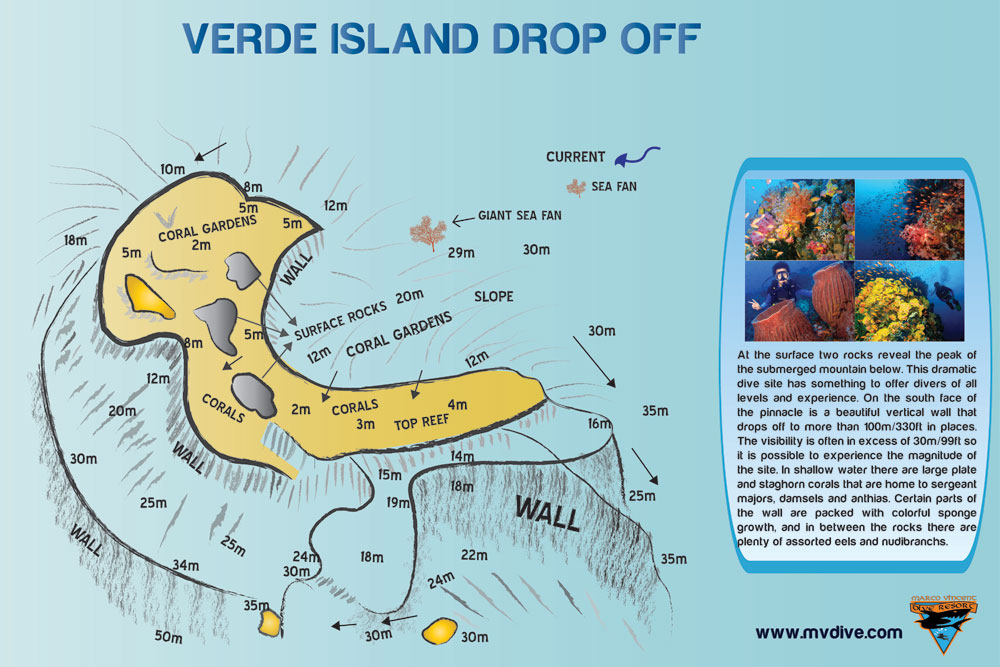
Verde Island Drop OFF
At the surface two rocks reveal the peak of the submerged mountain below. This dramatic dive site has something to offer divers of all levels and experience. ON the south face of the pinnacle is a beautiful vertical wall that drops off to more than 100m/330ft in places. The visibility is often in excess of 30m/99ft so it is possible to experience the magnitude of the site. In shallow water there are large plate and staghorn corals that are home to sergeant majors, damsels and anthias. Certain parts of the wall are packed with colorful sponge growth, and in between the rocks there are plenty of assorted eels and nudibranchs.
West Escarceo
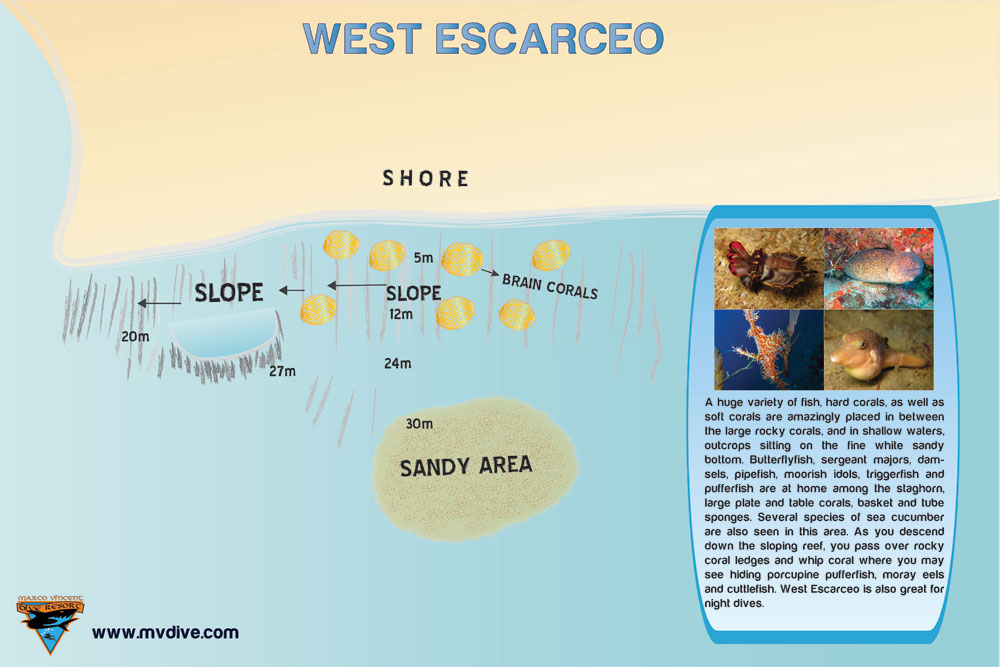
A huge variety of fish, hard corals, as well as soft corals are amazingly placed in between the large rocky corals, and in shallow waters, outcrops sitting on the line white sandy bottom. Butterflyfish, sergeant majors, damsels, pipefish, Moorish idols, triggerfish and pufferfish are at home among the staghorn, large plate and table corals, basket and tube sponges. Several species of sea cucumber are also seen in this area. As you descend down the sloping reef, you pass over rocky coral ledges and whip coral where you may see hiding porcupine pufferfish, moray eels and cuttlefish. West Escarceo is also great for night dives.
Alma Jane Wreck
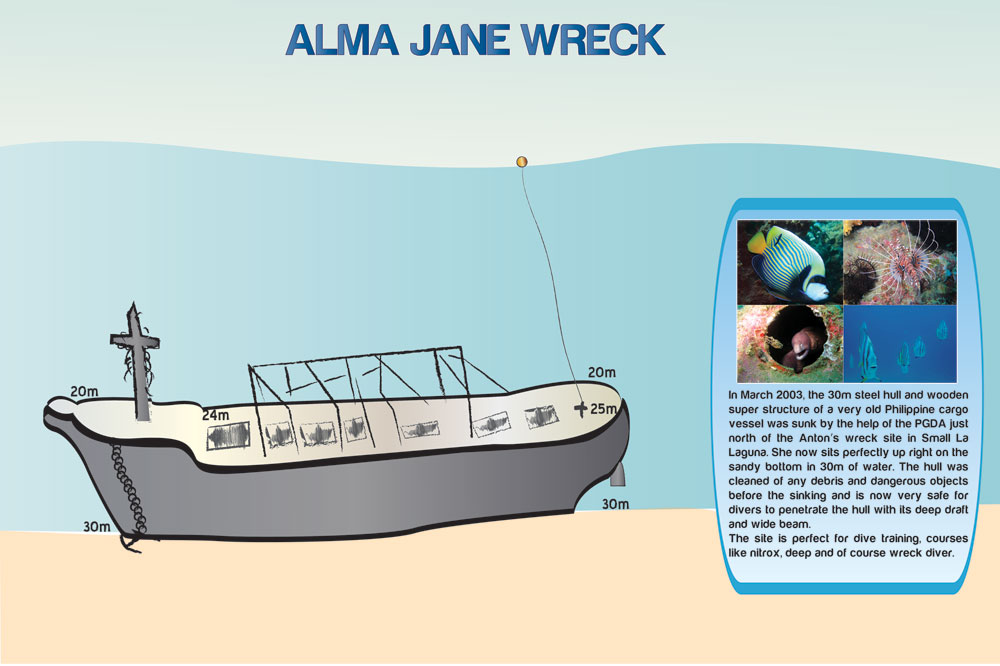
In March 2003, the 30m steel hull and wooden super structure of a very old Philippine Cargo vessel was sunk by the help of PGDA just north of the Anton’s wreck site in Small La Laguna. She now sits perfectly up right on the sandy bottom in 30m of water. The hull was cleaned of any debris and dangerous objects before the sinking and is now very safe for divers to penetrate the hull with its deep draft and wide beam.
The site is perfect for dive training, courses like nitrox, deep and of course wreck diver.
Today, divers may enjoy an amazing underwater playground there. The skeletal remnants of the ship, encrusted with vibrant corals and filled with marine life, will greet you as you descend into the depths.
An amazing experience awaits you at the Alma Jane wreck dive site, regardless of your level of expertise diving or your desire to learn more about the underwater environment. Experience the beauty and history of this undiscovered Puerto Galera treasure, and make lifelong memories. Don’t miss the chance to share your journey with friends and other scuba divers and take breathtaking underwater photos.
Batangas Channel
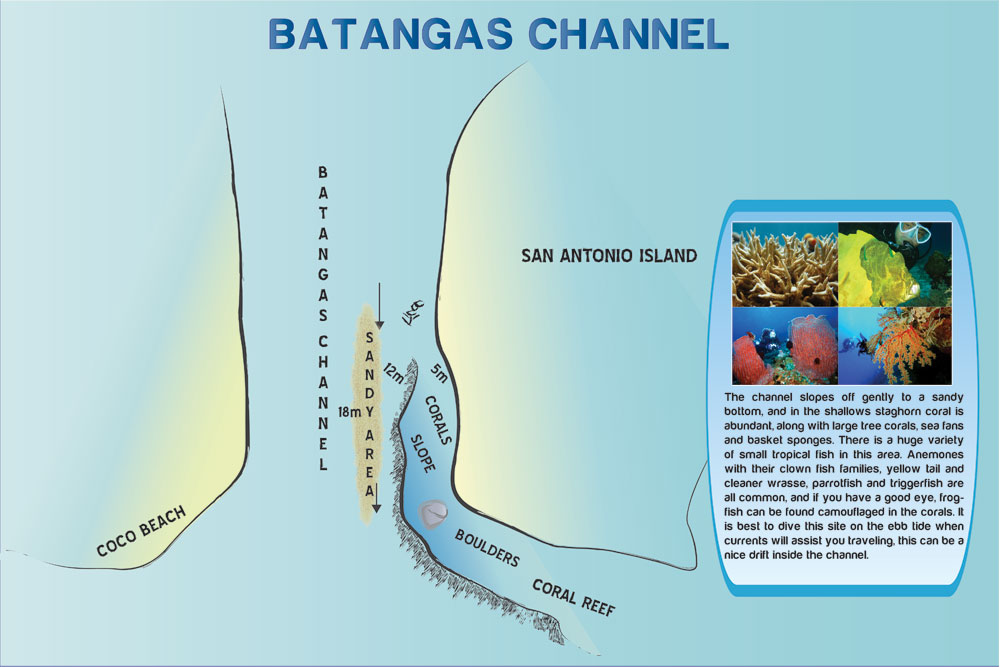
With a maximum depth of 15 meters, the dive site is an excellent choice for first-time drift-divers.
The Channel slopes off gently to a sandy bottom, and in the shallows staghorn coral is abundant, along with large tree corals, seat fans and basket sponges. There is a huge variety of small tropical fish in this area.
Anemones with their clown fish families, yellow tail and cleaner wrasse, parrotfish and triggerfish are all common, and if you have a good eye, frogfish can be found camouflage in the corals. It is best to dive this site on the ebb tide when currents will assists you traveling, this can be a nice drift inside the channel.
Coral Cove
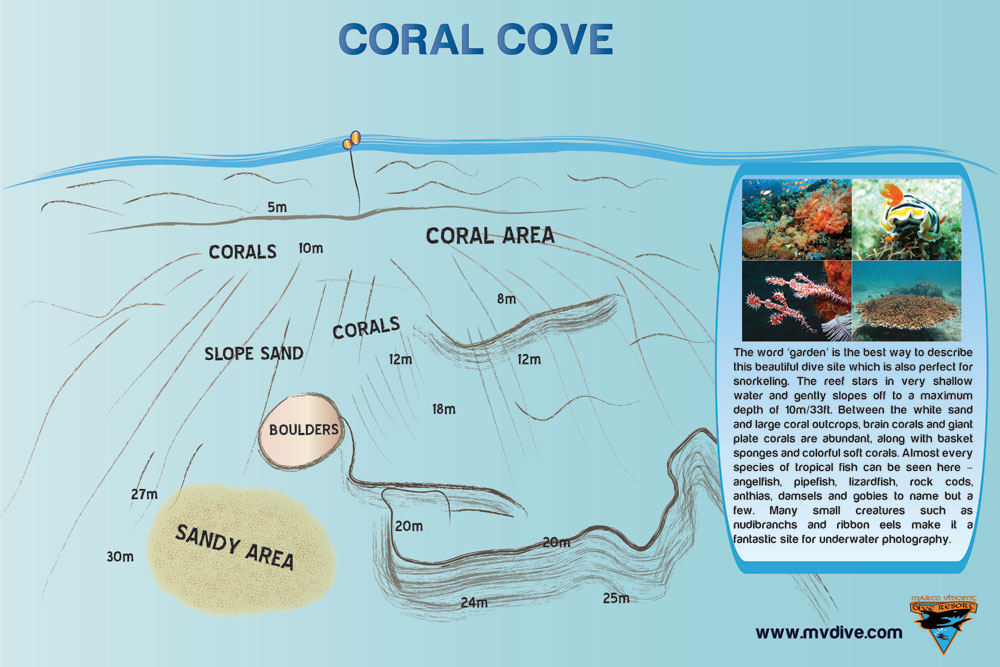
The word “garden” is the best way to describe this beautiful dive site which is also perfect for snorkeling.
The reef starts in very shallow water and gently slopes off to a maximum depth of 10m/33ft. Between the white sand and large corals outcrops, brain corals and giant plate corals are abundant, along with basket sponges and colorful soft corals. Almost every species of tropical fish can be seen here- angelfish, pipefish, lizardfish, rock cods, anthias, damsels, and gobies to name but a few. Many small creatures such as nudibranchs and ribbon eels make it a fantastic site for underwater photography.
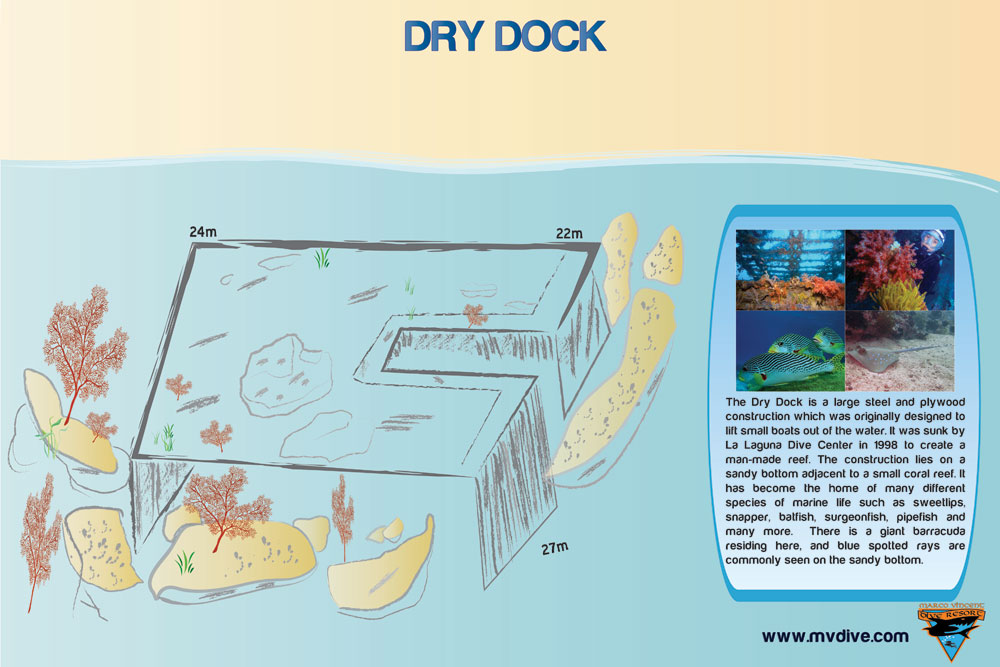
Dry Dock
The Dry Dock is a large steel and plywood construction which was originally designed to lift small boats out of the water.
It was sunk by La Laguna Dive Center in 1998 to create a man-made reef. The construction lies on a sandy bottom adjacent to a small coral reef. It has become the home of many different species of marine life such as sweetlips, snapper, batfish, surgeonfish, pipefish and many more. There is a giant barracuda residing here, and blue spotted rays are commonly seen on sandy bottom.
Less than five minutes from the diving center, the Dry Dock is a dive site best suited for experienced divers or nitrox.
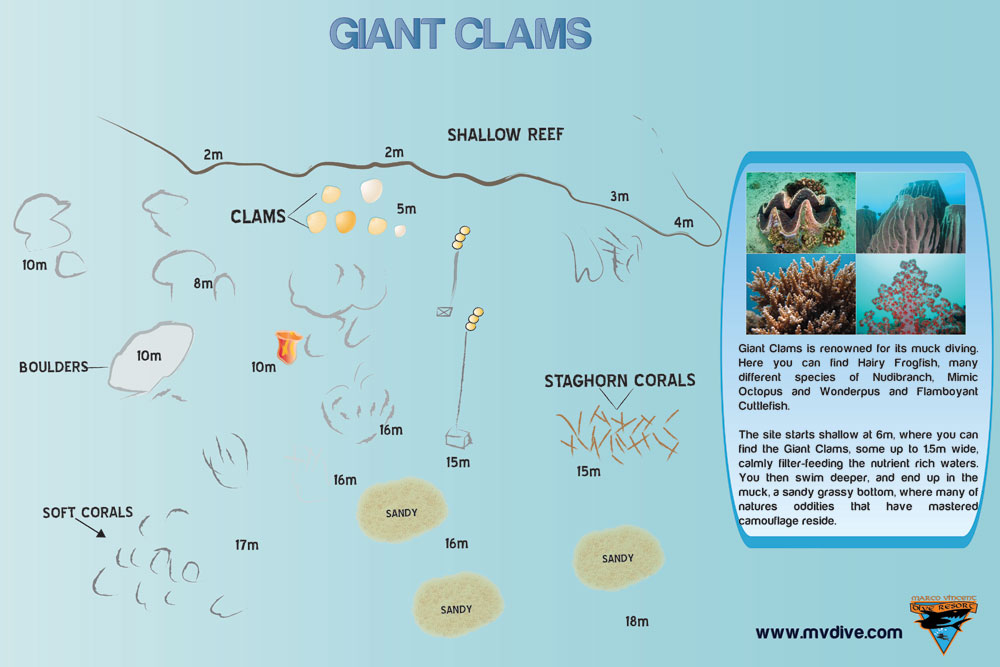
Giant Clams
Giant Clams dive site is renowned for its muck diving.
Here you can find hairy frogfish, many different species of nudibranch, mimic octopus, wonderpus and flamboyant cuttlefish. The site start the shallow at 6m, where you can find the giant clam, sum up to 1.5m wide, calmly filter-feeding the nutrient rich waters. You then swim deeper, and end up in the muck, a sandy grassy bottom, where many of nature oddities that have mastered camouflage reside. The Mimics and Wonderpus may emerge to hunt during a night dive.
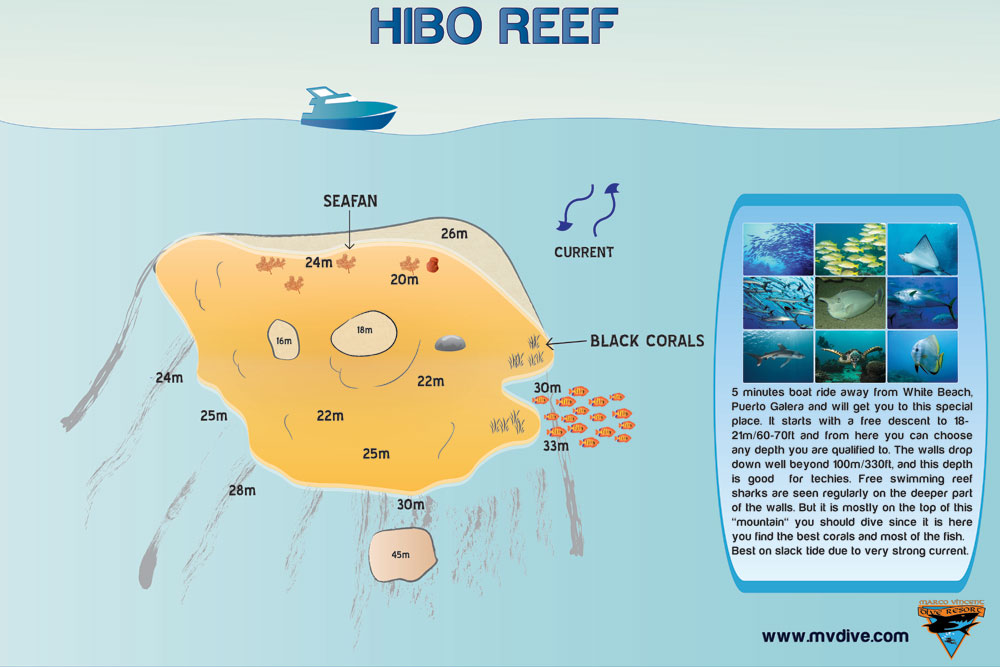
Hibo Reef
Just five minutes boat ride away from White Beach and will get you to this special place regarded as one of the most interesting and legendary dive sites in Mindoro.
It starts with a free descent to 18-21m/60-70ft and from here you can choose any depth you are qualified to. The walls drop down well beyond 100m/330ft, and this depth is good for techies.
Free swimming reef sharks are seen regularly on the deeper part of the walls. But it is mostly on the top of this “mountain” you should dive since it is here you find the best corals and most of the fish. Best on slack tide due to very strong current.
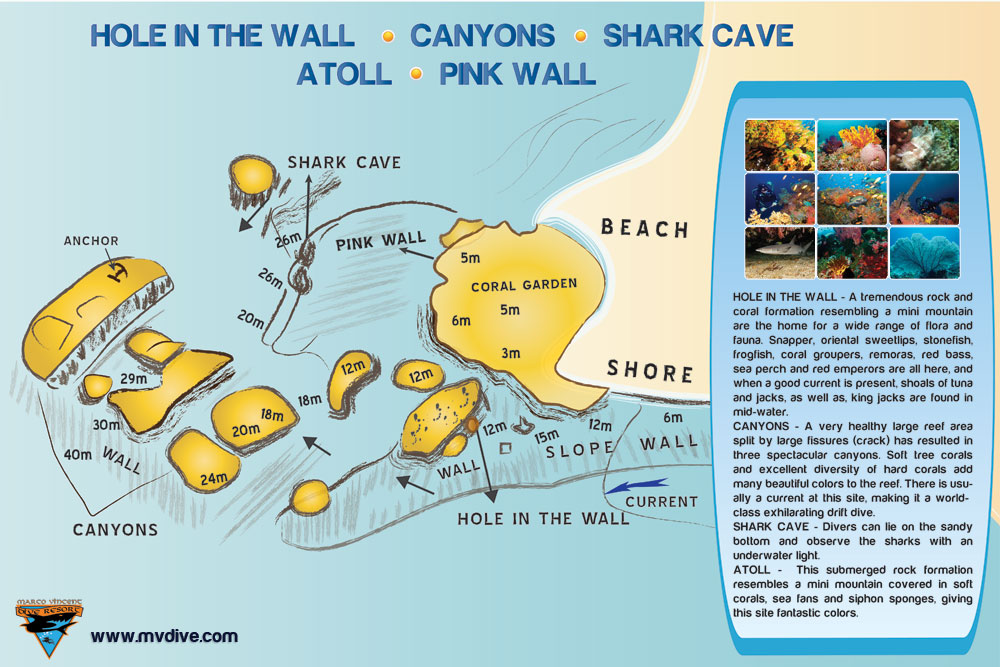
Hole in the Wall
A tremendous rock and coral formation resembling a mini mountain are the home for a wide range of flora and fauna. Snapper, oriental sweetlips, stonefish, frogfish, coral groupers, remoras, red bass, sea perch and red emperors are all here, and when good current is present, shoals of tuna and jacks, as well as king jacks are found in mid-water.
Even beginners who have strong buoyancy control can dive this relatively easy dive.
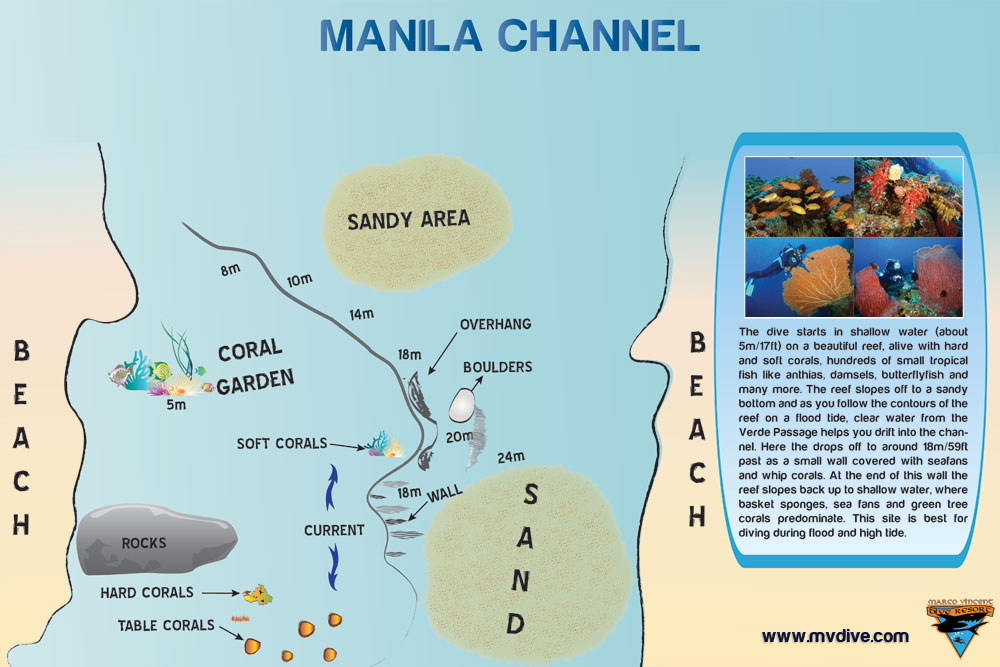
Manila Channel
The dive start in shallow water about 5m/17ft on a beautiful reef, alive with hard and soft corals, hundreds of small tropical fish like anthias, damsels, butterflyfish and many more. The reef slopes off to a sandy bottom and as you follow the contours of the reef on a flood tide, clear water from the Verde Island Passage helps you drift into the channel. Here the drops off to around 18m/59ft past as a small wall covered with seafans and whip corals. At the end of this wall the reef slopes back up to shallow water, where basket sponges, sea fans and green tree corals predominate. This site is best for diving during flood and high tide.
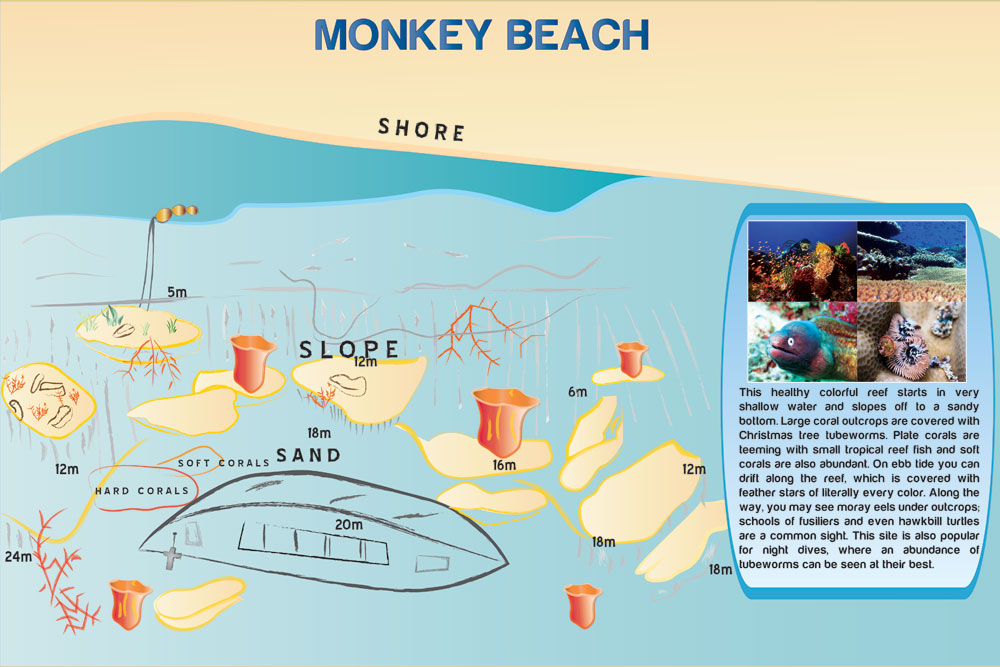
Monkey Beach
This healthy colorful reef starts in very shallow water and slopes off to a sandy bottom. Large coral outcrops are covered with Christmas tree tubeworms. Plate corals teeming with small tropical reef fish and soft corals are abundant. On ebb tide you can drift along the reef, which is covered with feather stars of literally every color. Along the way, you may see moray eels under outcrops; schools of fusiliers and even hawkbill turtles are common sight. This site is also popular for night dives, where an abundance of tubeworms can be seen at their best.
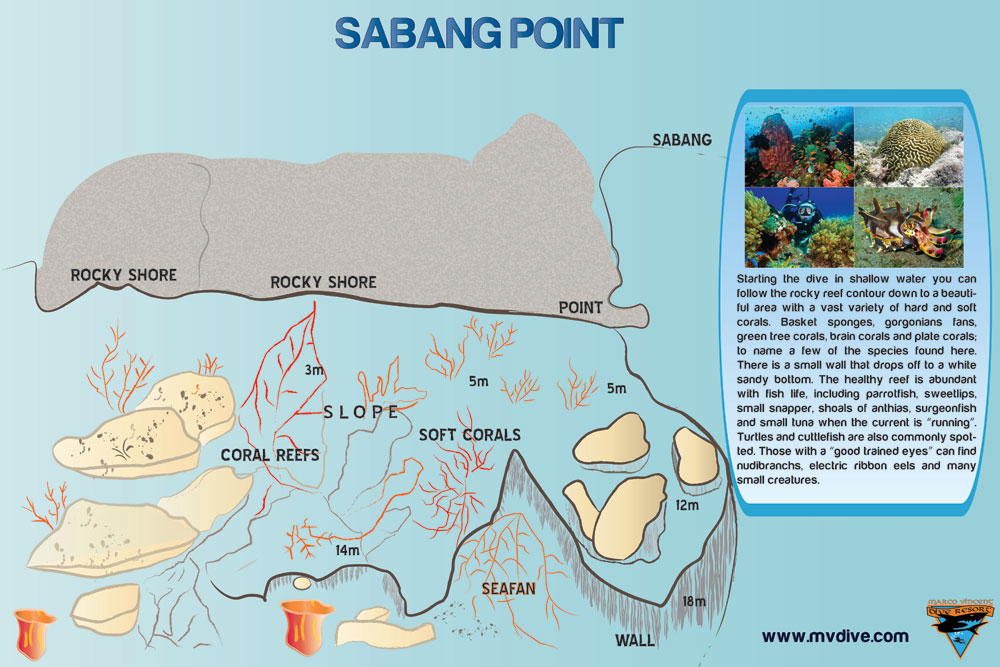
Sabang Wrecks
Descending down a mooring line, you are commonly faced by a school of batfish that are usually fed by divers who visit the site. On the sandy bottom lies the dilapidated wooden hull of a Vietnamese fishing boat, which has been almost completely colonized by marine life. Care must be taken when diving close to the wreck due to numerous scorpionfish, which reside there. In and around the wreck big white-eyed and snowflakes moray eels can be found. Lionfish and scorpion fish come out to feed, and stargazers look up at you with a smile from the sandy seabed. Small schools of baby squid are sometimes attracted to the beam of divers’ lights. Best diving is during slack tide.